
A year ago, enterprise AI still sounded like inventory.
How many use cases do we have? Which chatbot pilots are live? What is the innovation-lab scorecard this quarter?
That question aged badly.
Everything turned out to be a use case. In 2026 the transition everyone kept promising actually started: agentic work left the demo and touched real operating loops. The useful question changed with it.
What are we transforming into?
"AI-native" draws a line. On one side: companies that glommed ChatGPT onto last year's process map. On the other: companies that redesigned from the ground up so agents and humans share context, skills, governance, and ownership.
The substance of that second camp is finally concrete enough to argue about. Alex Lieberman, who turns legacy companies into AI-native ones for a living, posted 30 features of an AI-native company. Read his full list yourself. The list is messy in a good way. It reads like an operator's notebook, not a vendor deck.
Here is the version that matters if you lead product or engineering.
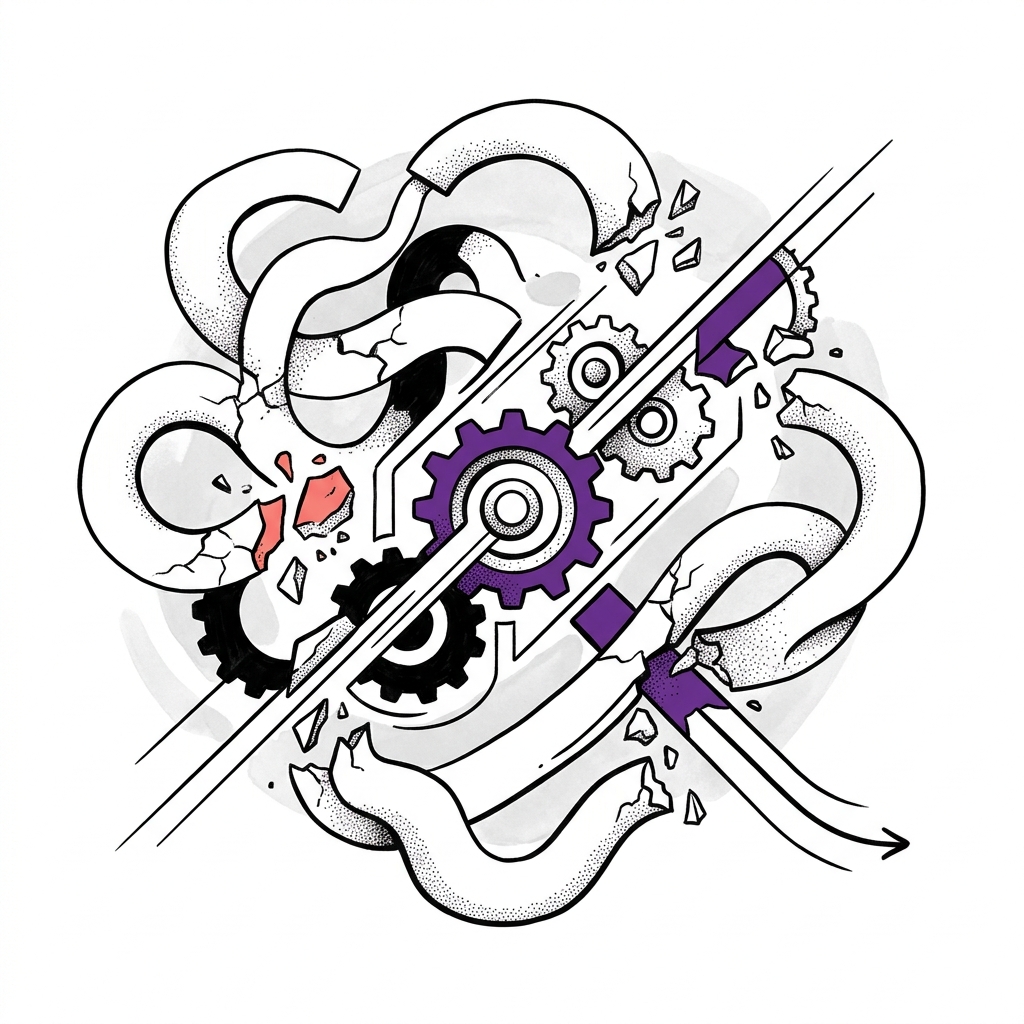
Map the work. Do not fossilize it.
Feature one is a function-by-function process blueprint of the whole business. You cannot transform what you cannot see.
Agree. Hard warning attached.
Too many teams map work so agents can copy the human steps in order. That is the wrong reason to blueprint.
Process maps are gold because they capture edge cases, tribal knowledge, and the ugly parts locked in hallway conversations and Slack side chats. Agents need that context. They do not need a cage that says "do it exactly the way Brenda did it in 2019."
Agents will not work the way humans worked. Artificially constraining them to the old pattern is often the wrong move. Give the goal, the guardrails, the data they can touch, and the definition of done. Let them find a better path. If your transformation program exists to make agents impersonate yesterday's workflow, you are buying activity, not leverage.
Everyone needs a daily driver harness
Nine months ago, "daily driver" meant access to a frontier model. That is not enough anymore.
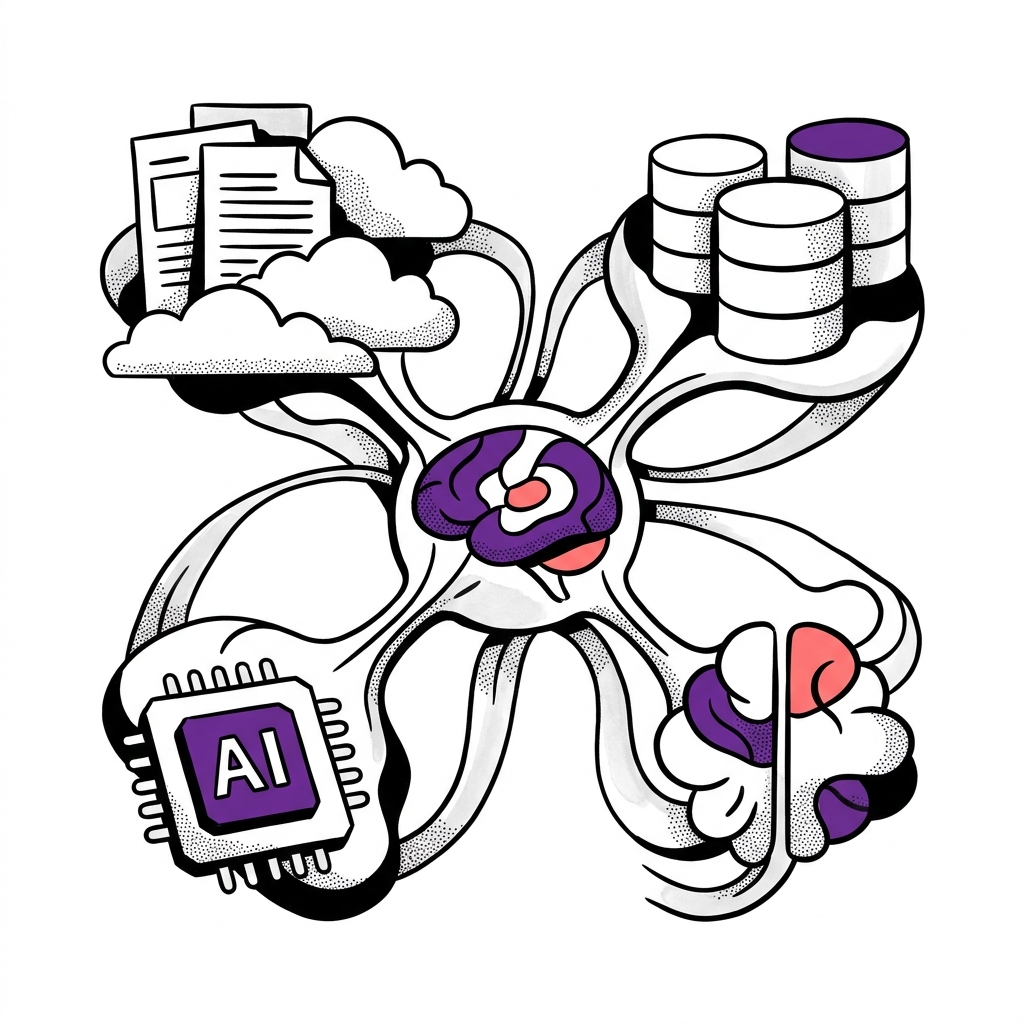
Everyone gets a work harness: Claude Cowork, Codex, Grok Bot, ChatGPT at Work, or a rolled-own stack on an open foundation. The environment has to hold context, skills, and tools for advanced knowledge work and coding, including for people who are not software engineers.
Getting comfortable with a harness means getting comfortable with context. Skills. Tool access. Peak flexibility. The companies that over-invest in one closed harness and wake up locked out of models after an acquisition will learn this the expensive way.
Alongside that sits the intelligence layer: structured data, unstructured docs, and business logic agents can query. One monolithic source of truth is the dream. For big orgs, a mesh or lattice of sources that agents can traverse, and that humans can reconcile when they disagree, is closer to reality. Context management is becoming a real discipline either way.
Context is code. Architecture notes and conventions stay current because stale context is how agents confidently ship the wrong thing.
And design for change, not stasis. "Throw everything away every three months" is dramatic. The real point is brutal: do not get attached to the clever workflow you figured out last quarter. If the labs do their job, better ways will keep showing up.
Skills, tokens, and cost per done
AI-native engineering stops treating every prompt like a one-off.
Distribute skills, not just prompts. That is agent management. Expensive models plan. Cheaper, faster models execute. Organize knowledge so agents load the slice they need, not the whole company wiki. Progressive disclosure is not a UX nicety. It is how you stop burning tokens on junk context.
"Cost per accepted PR" is an early version of the metric that matters: completeness plus cost per completeness. Vanity velocity is dead. Cost and quality for work that lands is not.
The agent-native SDLC is the same idea at fleet scale. Agents plan, write, test, review, and ship. Humans set intent and acceptance criteria. Non-engineers get a citizen-developer path with governance, versioning, and conventions baked in. Not shadow IT with nicer copy. Contiguous with engineering, not a parallel mess.
Loops beat one-shot prompts. Give a goal, bumpers, and a verifiable success metric, then let the agent iterate until it clears the bar. "Make the interface look good" is not a finish line. "Hit X% on this eval" is.
The human sandwich and earned autonomy
Call feature 22 what it is: the human sandwich. Judgment at the first and final mile.
I am less sure where humans belong in the middle. Some workflows will run almost entirely agentically. The patterns are not settled yet. Anyone selling you certainty about the middle of the sandwich is guessing.
Evals are infrastructure. New models get tested against your core processes for cost and performance. Looping without evals is just expensive wandering.
Everyone is a builder. Especially C-level. That does not mean every knowledge worker becomes a full-time agent manager overnight. It means the capacity to build, prototype, and ship solutions to your own problems is now a critical capability.
Record everything worth learning from. What you do not capture cannot become AI-enabled work later. Seventy-five meeting notetakers in every Zoom is annoying. The paradigm underneath them is right.
Governance is not the enemy. Treated as a transformation partner, legal, HR, and IT unlock new work instead of chasing it. Guardrails before features. Agents inherit the asker's permissions in the data layer. Autonomy is earned: observe, suggest, act with approval, then act alone inside a defined boundary.

Trace every output to prompt, model, data, and approver so feedback attaches to something specific, not a vague sense that something is off.
The missing feature is ownership
The best addition to Lieberman's list is the one that showed up in the replies: clear ownership and accountability.
AI can automate a lot. Someone still owns the outcome. Every AI workflow needs an owner, a measurable goal, and a human responsible when things go wrong. The best AI-native companies will not only ask "can AI do this?" They will ask "who owns the result?"
That is a new management discipline. It applies to current managers and to everyone else, because everyone is becoming a manager of agents as well as an implementer of their own work.
The hard part was never the demo. It is authority.
For the full 30-feature checklist, start with Alex Lieberman's original post.
What to do Monday
You do not need all 30 features before lunch.
Start with five:
- Blueprint one revenue or delivery workflow for context, not for step-for-step imitation.
- Put every builder on one shared daily driver harness with shared skills and standards.
- Stand up a thin intelligence layer for that workflow: docs, data, and business rules agents can query.
- Measure one hard number, cost per accepted change or cost per successful task, and review it weekly.
- Write ownership rules before you widen autonomy: who approves, who can stop a run, what "done" means.
The companies that win will not have the longest use case spreadsheet.
They will rebuild the operating system so context compounds, skills stay consistent, governance unlocks speed, and humans still own the standard.
AI-native is not a slogan. It is the harness, the evals, and the Monday habits that make agents safe to trust.